

A little stress, the right amount.
The body adapts to a controlled dose of altitude, heat and light, the way lifting a weight makes a muscle stronger. EXALTxp doses each one, in the right order, and a coach leads the room.
Each one trains something different.
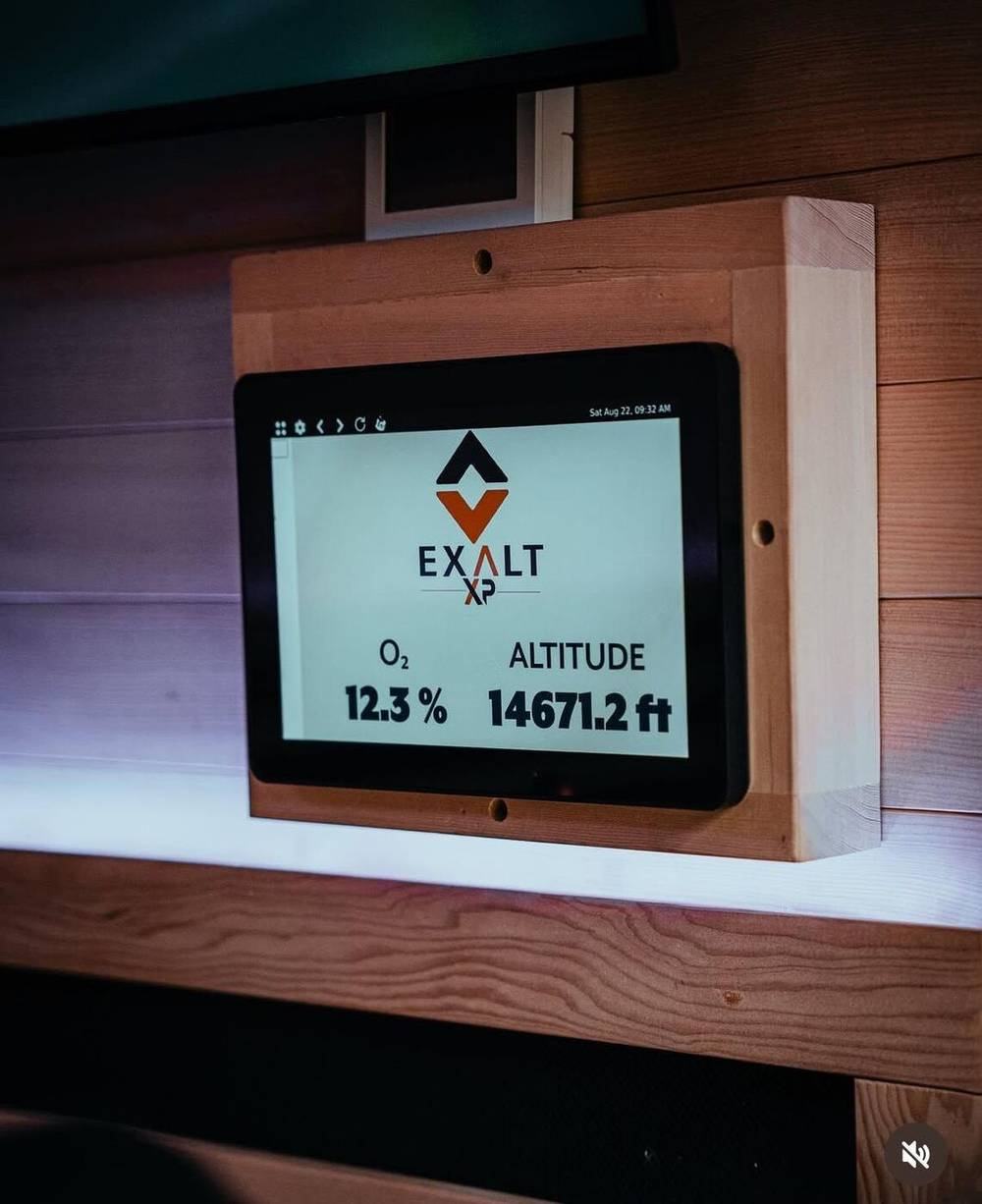
Less oxygen, a bigger engine.
Oxygen is lowered from the normal 20.9% to about 11% to 17% at normal pressure, so the heart and lungs do more with every breath. Up to about 20,000 ft equivalent.
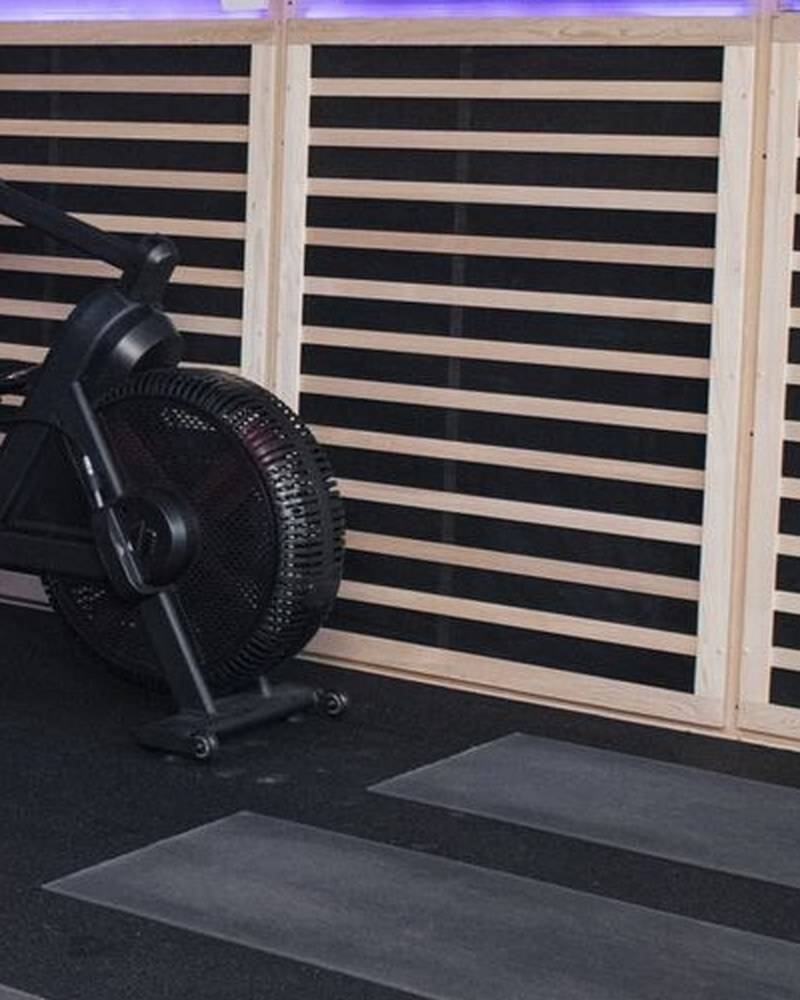
Heat tolerance.
Carbon panels warm the whole room up to 45°C. Training in heat builds tolerance and conditioning.
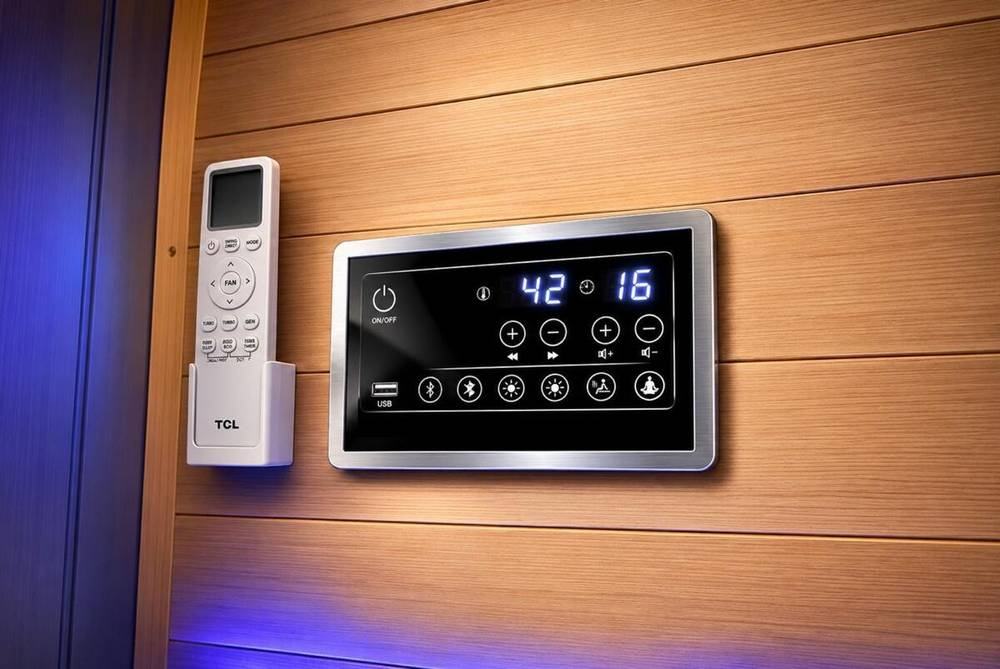
Recovery, in the room.
Red and near infrared light built into the walls, used in the recovery part of a session.
The studio sets the dose. You do the work.
The regulation period
Most training counts the reps and ignores the rest between them. In an EXALTxp session the rest is the point. After each effort you have about 60 seconds to settle your breathing and bring yourself back to calm before the next one. As you improve, that window shrinks to 40 seconds, then 30. In Roman's words, “that's the gold”.
The number on your finger
Oxygen saturation is read during the session. In thin air it drops, and the body's instinct is to fight that. The method teaches you to relax into it. The calmer you are, the more easily the number settles, so it becomes an honest measure of composure, not just fitness. Leo calls it a truth meter.
Check in
Screening first. Oxygen saturation is monitored through the session.
Set the dose
Altitude, heat and light are set to the group and the day. Altitude sessions and heat sessions are run on separate days.
Train
Interval cardio on air bikes, rowers, ski ergs or treadmills, strength on the mats, or breath work.
Recover
Red light and breathing to close the session.
Heat gets you to the hard zone faster.
Aerobic capacity builds at 90% to 100% of maximum heart rate, and that zone is hard to reach and hard to hold. Heart rate rises with core temperature, so in a warm room it climbs with far less effort. Leo's comparison: four hard four minute intervals at normal temperature might give six minutes in the zone. A steady 20 minute heat session can keep you there for most of it.
Less load on the body. The same work for the heart and lungs.
With less oxygen in the air, the same effort asks more of the heart and lungs, so you can ease the mechanical load and still get the training effect. Roman's rule of thumb from coaching: for every 3,000 ft of altitude, the load comes down by about 6%. For older bodies and heavy training weeks, that means fewer hours of impact for the same result.
16 sessions over four weeks.
As run at Genesis Health + Fitness in July 2026. Two altitude days and two heat days a week, building from acclimatisation to a retest.
Ignition
Acclimatise to altitude and heat and learn the technique.
Ascent
Build training load as adaptation begins.
Summit
Peak stimulus at the top of each member's safe range.
Integration
Consolidate and retest against the baseline.
The timetable Genesis ran in the July 2026 pilot: 16 coached sessions over four weeks, six to 12 people a session, on three to six machines and three to six mats. Your club sets its own times.
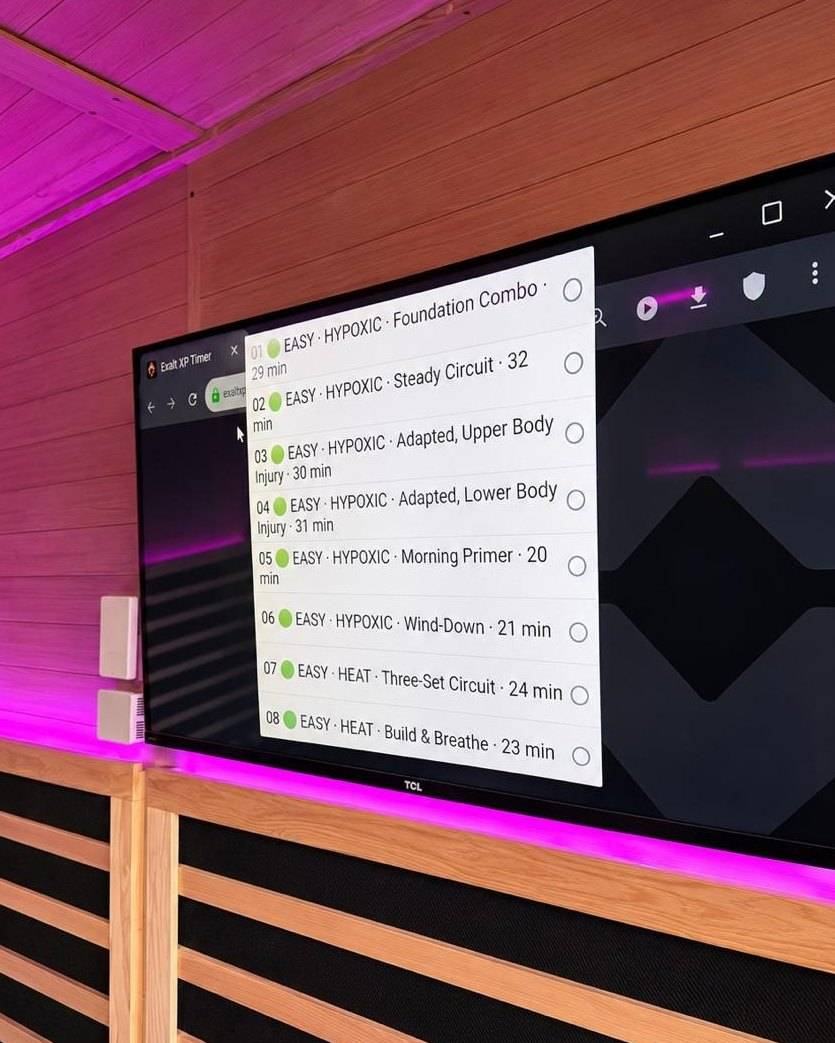
Your coach leads. The room does the dosing.
Classes are scheduled from the studio's operating system. It sets the altitude, heat and timers and shows oxygen and altitude on the wall. The sessions are built in: Foundation Combo, Steady Circuit, Morning Primer and Wind Down at altitude, Three Set Circuit and Build and Breathe in heat, each 20 to 32 minutes. We train your coaches at installation, and a practitioner certification course is available for teams that want to go further.
The EXALTxp app, for programmes and tracking, is in development.
The science
What altitude, heat and red light do to the body, and what the evidence shows.
Read moreGo deeperSafety
Screening, oxygen monitoring, who should check first, and our wellness position.
Read moreGo deeperSpecifications
Sizes, power, ventilation, site needs and what installation includes.
Read moreGo deeperOwning a studio
Prices, payment stages, lead times, warranty and the path to your first session.
Read more